A notebook can be a simple place to capture ideas, plan your day, record observations, or practice a creative skill. Yet many notebooks end up sitting unused in a drawer. The problem is often not a lack of motivation. It is a poor match between the notebook and the way you actually live and write.
The best notebook is not necessarily the most expensive, attractive, or popular option. It is the one that feels natural to pick up and use. By considering your habits, preferred format, writing tools, and daily routine, you can choose a notebook that earns a regular place in your life.
Start With the Notebook’s Main Purpose
Before comparing paper types and cover designs, decide what you want the notebook to do. A notebook designed for quick work notes may not be suitable for detailed sketches or long-form journaling.
Common uses include:
– Daily planning and to-do lists
– Meeting or class notes
– Journaling and personal reflection
– Writing ideas and drafts
– Sketching and doodling
– Travel notes and memories
– Tracking habits, projects, or observations
– Recording recipes, quotes, or reading notes
If you have several purposes in mind, consider whether one notebook can handle them all. Some people prefer a single flexible notebook, while others find it easier to use separate notebooks for work, personal writing, and creative projects.
A clear purpose also helps you avoid buying a notebook simply because it looks appealing. Good design is a bonus, but usefulness should come first.
Choose a Size That Fits Your Routine
Notebook size affects how often you will carry and use it. A large notebook offers plenty of writing space, but it may be inconvenient to take with you. A small notebook is portable, though it may feel cramped for longer entries or detailed planning.
Small notebooks
Small notebooks are useful for:
– Short lists
– Quick reminders
– Pocket notes
– Shopping lists
– Capturing ideas while traveling
They are easy to carry and can be a good choice if you want to build a consistent writing habit. However, limited space may make them less suitable for projects that require diagrams, several pages, or longer notes.
Medium notebooks
Medium-sized notebooks offer a practical balance. They usually provide enough room for daily notes while remaining comfortable to carry in a bag. This size works well for journaling, planning, work notes, and general-purpose writing.
For many people, a medium notebook is the safest starting point because it is neither too restrictive nor too bulky.
Large notebooks
Large notebooks are a good fit for desk-based work, detailed planning, drawing, and extended writing. They give you room to spread out and organize information visually.
The main drawback is portability. If you rarely carry a bag or prefer to write away from a desk, a large notebook may be used less often than expected.
Pick the Right Paper Layout
The page layout influences what you can write and how organized your notes feel. Choose a format that supports your preferred style rather than forcing you to work around it.
Lined paper
Lined pages are a reliable choice for writing, journaling, and lists. They provide structure without requiring much thought. If you mostly write sentences and paragraphs, lined paper is often the most comfortable option.
Blank paper
Blank pages offer maximum flexibility. They work well for sketches, diagrams, mind maps, lettering, and free-form notes. Some writers also prefer blank paper because it feels less restrictive.
The lack of structure can be unhelpful if you often need to organize lists or keep writing aligned.
Grid paper
Grid paper is useful for planning, tables, charts, diagrams, and neat writing. Small grids provide subtle guidance while leaving plenty of room for different types of notes.
It can be especially helpful if your notebook serves several purposes, such as planning projects, drawing layouts, and recording information.
Dotted paper
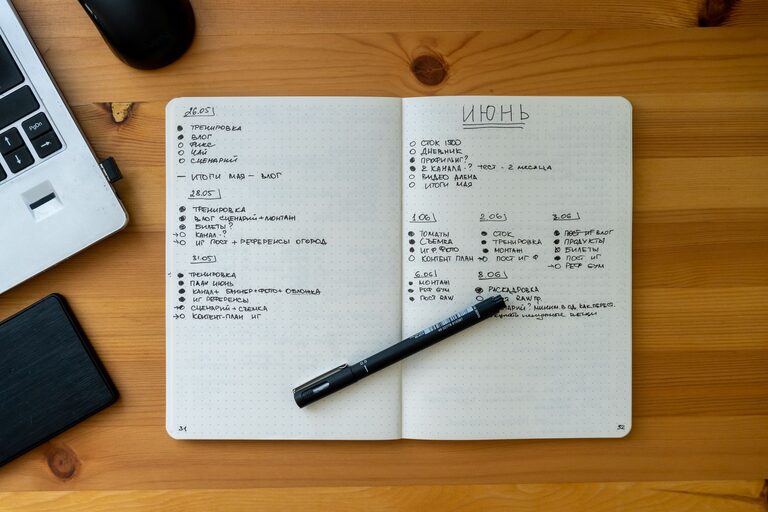
Dotted pages provide a flexible middle ground. The dots can guide writing, lists, diagrams, and simple layouts without being as visually prominent as lines or grids.
This format is popular among people who like to create their own page structures. However, it may take a little time to learn how to use effectively.
Consider Your Writing Tools
The pen, pencil, or marker you use can matter as much as the notebook itself. Some paper handles ink smoothly, while other paper may cause ink to spread through the page or show on the reverse side.
Think about your everyday tools:
– Ballpoint pens usually work well on many paper types.
– Gel pens may need smoother, thicker paper.
– Fountain pens often require paper that resists feathering and show-through.
– Markers and highlighters may need heavier paper.
– Pencils work on most paper but may feel better on surfaces with a little texture.
If possible, test a sample page before buying a notebook. Write on both sides, try your usual pen, and check whether the ink dries quickly. This small test can prevent frustration later.
Decide Between Portability and Capacity
A notebook that stays at home can be larger and heavier than one you plan to carry everywhere. Be realistic about how you move through your day.
Ask yourself:
– Will I carry it in a pocket, purse, backpack, or briefcase?
– Do I usually write at a desk or in different locations?
– Do I need space for several pages each day?
– Am I comfortable carrying extra weight?
– Will the notebook fit beside my usual devices and supplies?
If a notebook is inconvenient to carry, you may leave it behind when an idea or task appears. On the other hand, a very small notebook may become frustrating if you regularly run out of room.
The right choice is the size you can access when you need it without creating extra effort.
Look at the Binding and Cover
The binding affects how comfortably a notebook opens and lies flat. This detail is easy to overlook, but it can strongly influence whether you enjoy using the notebook.
Spiral binding
Spiral notebooks often open flat and make it easy to turn pages. They are practical for school, work, and everyday lists. The spiral can add bulk, though, and may feel uncomfortable under your hand while writing.
Sewn binding
Sewn notebooks are often durable and may open more easily than tightly glued notebooks. They can be a good choice for journals and long-term projects.
Glued binding
Glued notebooks can be slim and attractive. Their pages may not lie completely flat, especially near the center, so they are best for people who do not mind holding the notebook open.
Also consider the cover. A flexible cover is lighter and easier to pack, while a hardcover offers more protection and a stable writing surface. Choose based on where and how you expect to use the notebook.
Avoid Buying Too Much Notebook
A very thick notebook may seem like good value, but a large page count can make a notebook feel like a long-term commitment. If you are building a new habit, a thinner notebook may feel more approachable.
Starting with a smaller notebook has several advantages:
– It is easier to carry.
– You can finish it sooner.
– You can learn what features you prefer.
– You avoid committing to a format that does not suit you.
– Completing it can provide a satisfying sense of progress.
Once you understand your habits, you can choose a larger notebook for ongoing projects or daily use.
Make It Easy to Begin
Even the perfect notebook will remain unused if starting feels difficult. Keep it somewhere visible and convenient, such as beside your computer, on your desk, or near the place where you plan your day.
You can also make the first page simple. Write the date, add a short list, or record one idea. There is no need to create an elaborate system before you begin.
If you are unsure how to use the notebook, try a few simple formats:
– Write three priorities each morning.
– Record one idea each evening.
– Keep a running list of tasks.
– Use one page for notes and the facing page for actions.
– Reserve a section for questions, sketches, or reminders.
The goal is to reduce friction. When a notebook fits your routine and requires little preparation, you are more likely to return to it.
Choose Usefulness Over Perfection
A notebook does not need to be perfectly organized, beautifully decorated, or filled with important thoughts to be worthwhile. Its value comes from helping you think, remember, plan, and create.
Choose a notebook that matches your purpose, feels comfortable in your hands, works with your favorite writing tools, and is easy to access. Then give yourself permission to use it imperfectly. A notebook with crossed-out words, unfinished lists, and changing ideas is often a sign that it is doing its job.
About the Author